
Building a Brand for an Emerging Saudi Restaurant: From Concept to Loyalty
A practical guide to building a brand for an emerging Saudi restaurant: from defining the promise and the real guest, to visual and verbal identity, guest experience, the menu, daily marketing, and measurement and documentation for scale.
In this article
A new restaurant opens in Riyadh every week, and most disappear within a year. The difference isn't just the quality of the kubbeh or the oven temperature, but in how clear the brand is from day one. The brand isn't a logo on the facade; it's the promise every detail keeps: from the scent at the entrance to the way the cashier handles a complaint about a delayed order.
Start with the hardest question: Why do we exist?
Before picking colors or an Instagram handle, write a single sentence that answers the guest's implicit question: "Why come to you and not the competitor next door?" If the answer is "We serve good food," you haven't said anything. Be specific: We offer "Hijazi home flavors with modern techniques at everyday prices," or "A 100% Saudi burger experience from our own farms." That sentence becomes your compass for every decision that follows.
Know your real guest, not the "target segment"
Demographics (age, income, neighborhood) help, but they don't tell you why someone orders a specific dish at midnight. Sit in the dining room for a full week. Watch, ask, take notes: What do families order on Fridays? What do employees order on lunch breaks? What makes them photograph a dish and share it? These observations build realistic "guest personas" that guide the menu, decor, social tone, and even operating hours.
A name and logo that live in memory
A good name passes three tests: easy to pronounce in the local dialect, available as a domain and unified handle, and carries no unintended negative meaning. Test the name with 10 people outside your team: ask them to spell it and write it after hearing it once. The logo follows the name, it doesn't lead it. Design a logo that works in one color, at app-icon size, and on wet delivery cardboard. Complexity dies in cheap print.
Visual identity that serves the food, doesn't steal the spotlight
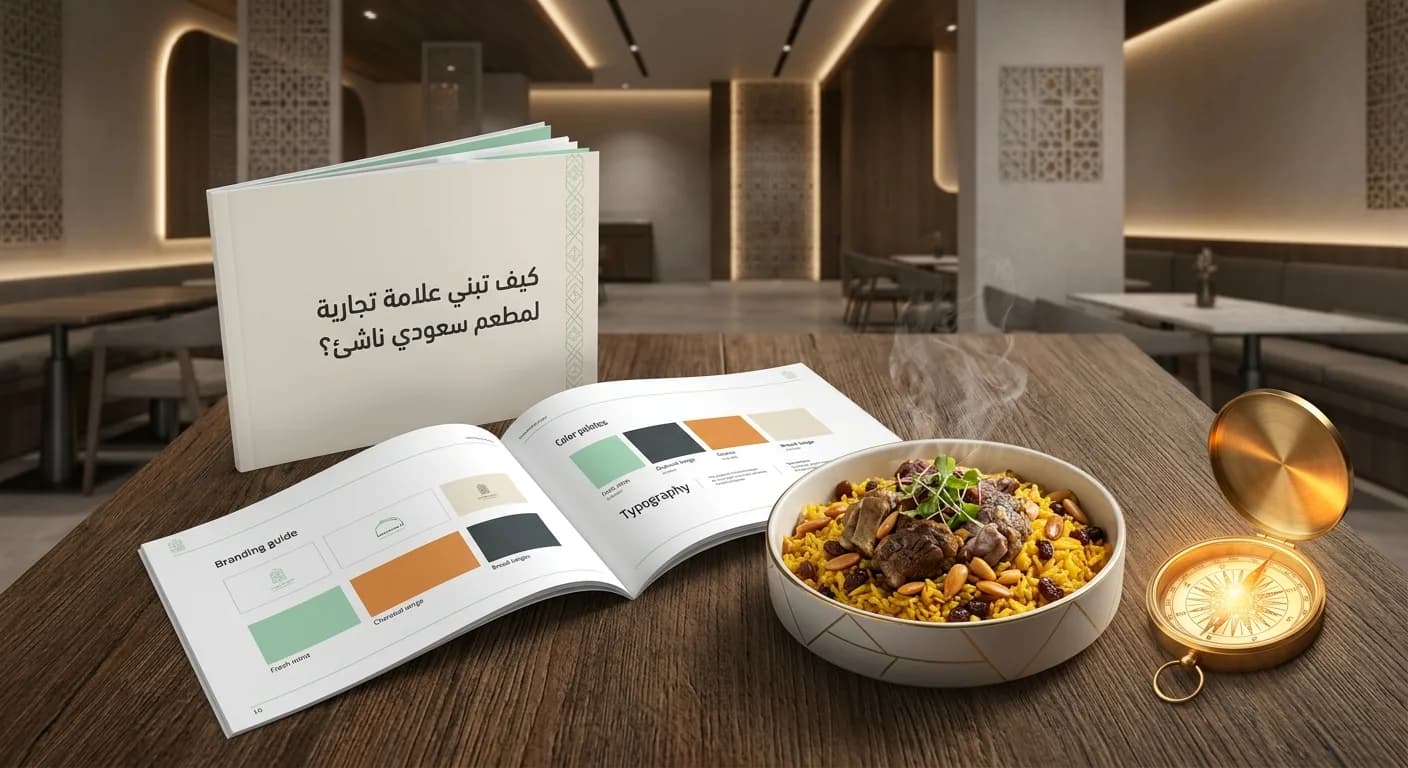
Choose a palette of three primary colors drawn from your ingredients or environment: fresh mint green, charcoal orange, bread beige. One Arabic font for headlines (legible at small sizes), and a matching Latin font for numbers and units. Set strict rules: logo clear space, allowed background colors, how to photograph dishes (45-degree angle, natural light, no filters). Document this in a two-page "Brand Guide" only — what isn't read isn't applied.
Voice: How we speak when we're not selling
The brand tone shows up in a reply to a negative comment, in an "Order being prepared" message, on a "Restroom is clean" sign. Write three traits that describe your personality: "Warm, direct, slightly playful." Then write practical examples: How do you apologize for a delay? How do you announce a seasonal dish? Train the team on these phrases and make them part of your SOPs. Consistency in voice builds trust faster than any ad campaign.
Guest experience starts before the door and ends after the receipt
Mapping the "guest journey" reveals gaps: Google Maps search → restaurant photos → recent reviews → booking/order → arrival → greeting → ordering → eating → payment → departure → follow-up. At every stop ask: Are we keeping the brand promise? Example: If you promise "Fast lunch for employees," the check must close in 30 seconds, and the lunch menu ready on the table before they sit. Small details (scented wipes, phone charger, hand-drawn kids' menu) create the difference people remember.
The menu: The brand's first product
Don't list 50 items to please everyone. Focus on 10-12 dishes you execute flawlessly daily, and that reflect the brand story. Name dishes to spark curiosity and tell an origin: "Grandma Noura's Liver" beats "Fried Liver." Design the menu visually to guide the eye to the most profitable and most identity-defining dishes. Update seasonally with only three new dishes, and drop what isn't ordered. A concise menu reduces waste, speeds training, and strengthens memory.
Marketing isn't a department, it's a daily culture
The best social content for an emerging restaurant isn't polished ads, but real moments: the chef flipping meat at dawn, the cleaner arranging chairs with pride, a regular laughing with the cashier. Dedicate 15 minutes daily to document one moment and post it with a short story. Encourage guests to share via simple incentives (free dessert for a story photo). Monitor comments and reply personally within an hour. Human interaction beats algorithms.
Measurement: What isn't measured isn't improved
Don't drown in complex weekly reports. Track just five indicators: 30-day guest return rate, average check value, new guest acquisition cost, online vs. dine-in order ratio, and Google rating (target 4.5+). Link each indicator to an action: if return rate drops, review the quality of the most-ordered dish and service speed. Data serves intuition, it doesn't replace it.
Scale starts with documentation
When investors ask for a second branch, they'll ask: "How do you guarantee the same taste and service?" The answer lives in the documented "Operations Manual": recipes weighed to the gram, prep step photos, greeting scripts, hygiene standards, complaint procedures. Start documenting day one, update weekly. A strong brand is repeatable without the founder present at every branch.
Bottom line: Brand is a habit, not a project
Building a brand for an emerging Saudi restaurant isn't a three-month campaign; it's a series of daily decisions that honor your promise to the guest. Start with a clear identity, design a cohesive experience, measure what matters, and document everything. The Saudi guest is smart, values authenticity, and rewards consistency with loyalty. Your next restaurant isn't just a place people eat; it's an address they choose with confidence.